Our book, The Marriage Battle: A Family Tradition, is out and available from our publishers Villarosa Media.
NEW BOOK:
IT’S HERE!
by Susan C. Green & Robin J. Phillips
AVAILABLE NOW

Our book, The Marriage Battle: A Family Tradition, is out and available from our publishers Villarosa Media.
by Susan C. Green & Robin J. Phillips
AVAILABLE NOW

Sue’s parents married in 1960 while it was still illegal in many U.S. states for a mixed race couple to wed.
I know it’s Pride Month and that has always been important and fun and empowering. But Sue and I are celebrating Loving Day this week, this month .. this year.
Few cases were more aptly named than Loving v. Virginia. 50 years ago today, June 12, 1967, the Supreme Court prohibited laws banning interracial marriage.
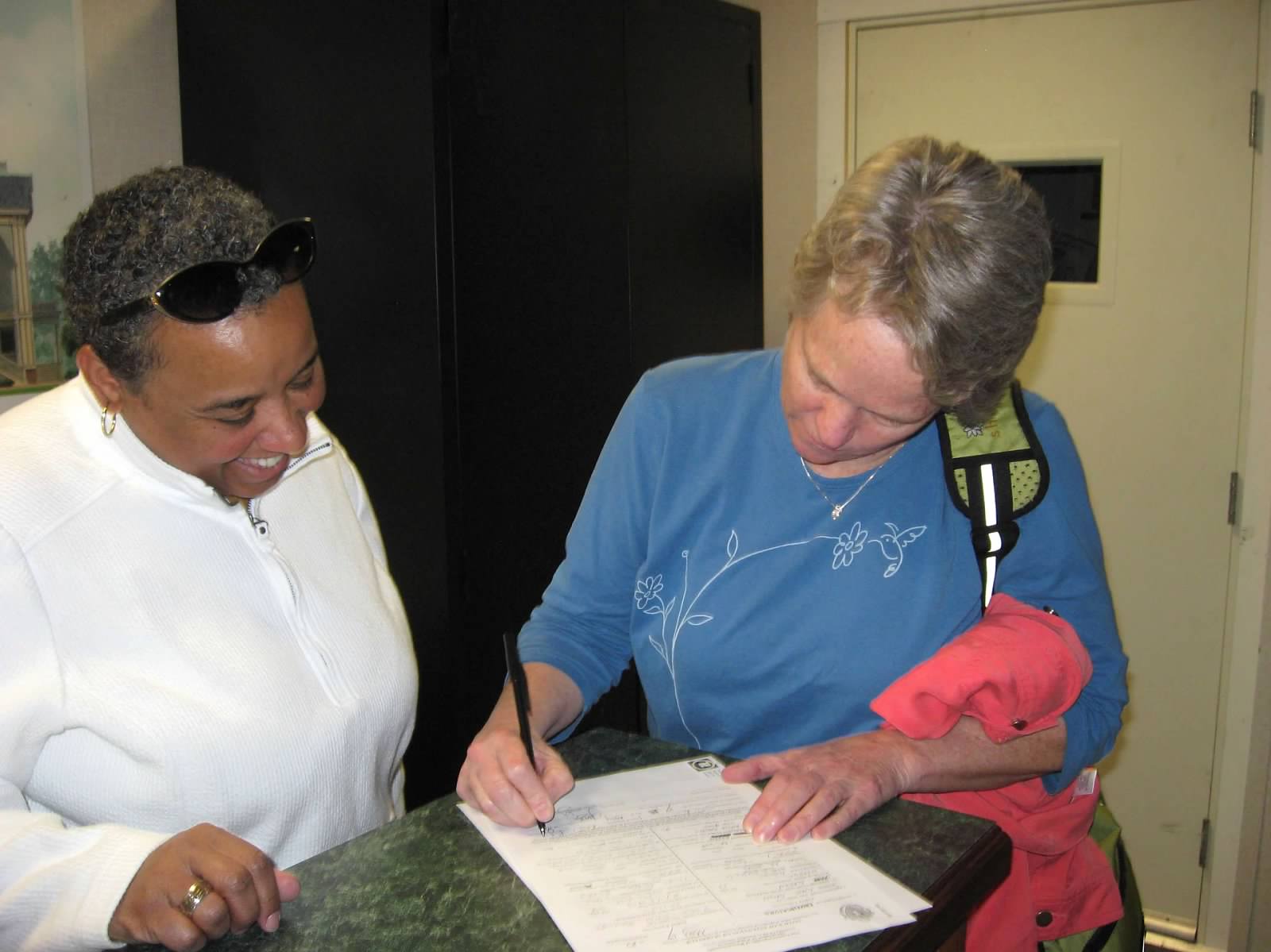
Applying for our marriage license.
Specifically, for Mildred and Richard Loving, the Court overturned Virginia’s “Act to Preserve Racial Integrity” which had banned interracial marriage in Virginia while defining a white person as someone who had no discernible nonwhite ancestry.
Loving someone is risky enough without having to fight the government for the fundamental freedom to do so. So, yes, Pride Month and Loving Day are very intertwined. Sue’s parents – an interracial couple – married several years before that 1967 ruling. And Sue and I married several years before bans against our union were thrown out by the Supreme Court.

On the beach in Provincetown, where we got married.
We have written a memoir about how her parents’ marriage and our marriage are part of this great patchwork quilt in American justice. It will be published this fall by Villarosa Media.
As this ACLU video stresses, neither ruling ended the deeply entrenched discrimination we still see today. It’s a great start, but we must stay vigilant.
More: Loving v. Virginia 1967
Video: ACLU on the importance of keeping vigilant
Here is a link to the slides I used while talking with members of SPJ – the Society of Professional Journalists – and its western states members at their annual convention in Phoenix.
Bottom line: Personal brand is more than your reputation.
“Personal brand is a collection of perceptions someone else has which describes the experience of having a relationship with you.”
It is what you bring to the table. What makes you different, distinct from others who are similar. What makes you spectacular. My session is 1 part strategy and tools and 4 parts therapy. Journalists, whether you are still in a newsroom or have moved on to another field, have skills that are very valuable in a wide range of jobs.
Enjoy the slides. Reach out to me if you’d like clarification or want to know more.
Personal Brand for Journalists @ SPJ 2016

Plan B. That’s what they call it. Journalists who have been downsized, squeezed out, shown the door. They start thinking about Plan B … that is once they get over what I call the Nancy Kerrigan stage of grief:
Plan Next
Plan B makes me think of second place, also ran, a choice you really didn’t want. I think it’s much healthier to go through life with an open mind, planning for the next adventure, learning as much as you can and keeping a close eye on the writing on the wall.
Plan Next thinkers take control. Even if they don’t manage the whole transition, Plan Next folks manage their reactions and build on what’s gone before. Build on their strengths.
In Arizona, people sometimes say, “I didn’t cross the border. The border crossed me.” Journalists can say, “I didn’t leave journalism. Journalism left me.”
Well, if journalism leaves you. Don’t look for Plan B. Be ready with a Plan Next.
Want to know more?
I’m thinking about all of this as I put together a session on Personal Branding for Journalists for the Society of Professional Journalists Western Regional Conference in Phoenix in late April. Full schedule is here. Stop by. Make it your Plan Next.
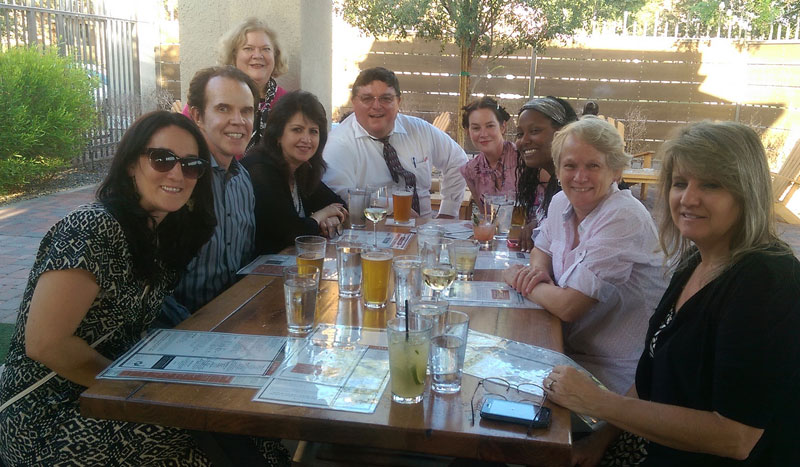
Such a nice early send off. Lots of teasing, lots of love.
I am in that limbo that we find ourselves in only a few times in life — well, some more than others. And journalists, I guess we get more practice than most.
I gave notice a week ago. I’m leaving my current job next week. And I’ll be starting another one the week after that. It’s a nice spot to be in: On one side, people are remembering me fondly and on the other, they are excited about all the potential I bring to them.
I’m headed to the City of Glendale (AZ) to run the City’s digital communications… I’ll be in charge of the city’s websites, social media, and whatever else we cook up in the future. I’m excited about joining a team that understands the power of transparency and community building.
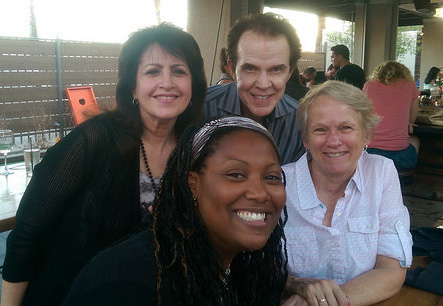
Truly a happy hour.
I’ve been honored to work at ASU, Cronkite and the Reynolds Center for Business Journalism, where I’ve been the Digital Director. I’ve had a wonderful time here for the past 5 years, but it’s a good time to step up to a new challenge.
I’m approaching this as an opportunity to figure out how Civic Information can be the new Community Journalism.
Some might not consider this critical journalism, but I do think there is a great opportunity to provide information, filling a gap left by struggling news organizations. I’ll be right there alongside the people of Glendale, residents, business owners, city workers, rooting for the city to do well, to thrive, to be fair, just and transparent. In the lexicon of journalism futurists, I’ll be a stakeholder too. I am no longer a detached observer.
Not sure exactly how it will all play out, but it sure feels like a natural progression from my early days in journalism working for a group of smart weekly newspapers in northern Virginia, just outside of Washington, D.C.
I’m not the first to say it, but it’s worth repeating: The purpose of journalism is to give people the information they need to make better decisions about their lives and society. The first loyalty to both journalists and government is to citizens. In a world awash in information, there has been no more important time for those of us with journalistic skills to help people understand and help them find their voice.
To get ready for my new role, I’ve been studying city websites and civic social media presence. There are a few good ones, but they fall off quickly. Austin, Portland … then not much. Even big cities have big issues when it comes to how they present themselves online. Some places, like Boston, are putting a lot of time and attention into social media, but that leaves out a large percentage of residents.
It’s going to be an interesting and fun challenge. And, until the transition is complete, I’m going to enjoy this nice warm spot in the middle.
 robin j phillips